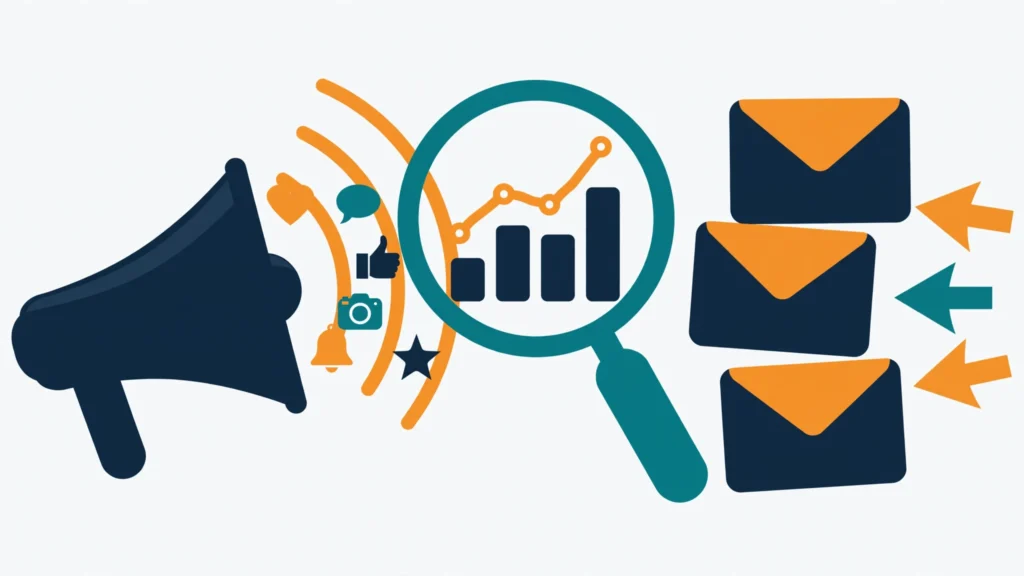
Digital marketing fundamentals are the core skills behind getting found, getting attention, and getting customers online: search engine optimization (SEO), content marketing, social media, email, and paid advertising. Learn how these five channels work together, and you have the complete foundation every online business runs on.
You don’t need a marketing degree or a big budget to start. A freelancer, a small shop owner, or a blogger can apply these basics this week with free tools. Let’s break each channel down into what it is, when to use it, and how to begin.
For a real example of a general-interest blog publishing marketing content, see what Vedasdev com actually is and the marketing articles it covers.
What Digital Marketing Actually Is
At its simplest, digital marketing is connecting with potential customers where they already spend time — Google, YouTube, Instagram, TikTok, email inboxes — and guiding them toward a purchase, signup, or other action. Every tactic you’ll ever encounter is a variation of three jobs: attract attention, engage interest, and convert that interest into revenue.
The channels below aren’t alternatives to choose between. Healthy businesses layer several of them, because each covers the others’ weaknesses.
1. SEO: Getting Found on Google
Search engine optimization means making your website the best answer Google can show for queries your customers type. When someone searches “plumber near me” or “best budget earbuds,” SEO decides who appears.
The three pillars of SEO
- On-page SEO: Your content itself — clear titles, helpful headings, natural keyword use, fast loading, mobile-friendly pages. This is fully in your control and where beginners should start.
- Off-page SEO: Your reputation — mainly backlinks from other sites vouching for you. Earned through great content, outreach, and digital PR.
- Technical SEO: Your site’s plumbing — crawlability, sitemaps, structured data, Core Web Vitals. Free tools like Google Search Console flag issues for you.
How to start with SEO this week
Pick one page on your site. Rewrite its title to match what customers actually search (check Google’s autocomplete and “People also ask”). Make sure the page answers the query completely within the first few paragraphs. Submit the URL in Search Console. That’s a genuine SEO win — repeat it across your site.
SEO is slow (expect 3–6 months for traction) but compounds: rankings you earn keep delivering free traffic for years.
2. Content Marketing: Earning Attention by Being Useful
Content marketing means publishing genuinely helpful material — blog posts, videos, guides, podcasts — that attracts your ideal customers and builds trust before they buy. This very article is content marketing.
Why it works
People research before they purchase. A skincare brand publishing “how to build a routine for oily skin” captures buyers at the exact moment of intent. Useful content also earns backlinks and social shares, which feed your SEO.
The formats that matter most
- Blog posts and guides: Best for SEO and long-term traffic.
- Video (YouTube, TikTok, Reels): Best for reach and personality-driven brands.
- Email newsletters: Best for retention — you own the audience.
- Case studies and reviews: Best for converting warm prospects.
Start with one format you can sustain weekly. Consistency beats ambition — a monthly guide you actually publish outperforms a podcast you abandon in episode three.
3. Social Media Marketing: Meeting Customers Where They Scroll
Social media marketing builds awareness and community on platforms like Instagram, TikTok, LinkedIn, Facebook, and X. It’s the fastest way to reach new people, but also the most rented land — algorithms change, and you don’t own your followers.
Platform quick guide
- Instagram/TikTok: Visual products, lifestyle brands, younger audiences. Short video dominates.
- LinkedIn: B2B, freelancers, professional services. Thought leadership and networking.
- Facebook: Local businesses, community groups, audiences 35+.
- YouTube: Evergreen tutorials and reviews; doubles as a search engine.
What actually works
Post natively for each platform (don’t just cross-post links), reply to every comment in your first year, and treat the first three seconds of any video as make-or-break. One engaged community of 1,000 beats 100,000 passive followers.
4. Email Marketing: Your Highest-ROI Channel
Email marketing is widely regarded as one of the highest-return digital channels, largely because an email list is an audience you own. No algorithm stands between you and your subscribers.
The essentials
- Lead magnet: Offer something valuable (a checklist, discount, free chapter) in exchange for the email address.
- Welcome sequence: 3–5 automated emails introducing who you are and what you offer.
- Regular broadcasts: Useful content mixed with occasional offers — the 80/20 rule (80% value, 20% selling) keeps unsubscribes low.
Free tiers from Mailchimp, Brevo, or ConvertKit cover beginners. Start collecting emails from day one, even before you have a product — future-you will be grateful.
5. Paid Advertising: Speed at a Price
Paid ads — Google Ads, Meta Ads, TikTok Ads — buy immediate visibility. They’re the faucet to SEO’s well: instant traffic that stops the moment you stop paying.
When paid makes sense
- Testing whether an offer converts before investing months in SEO
- Promoting time-sensitive launches or events
- Retargeting warm visitors who didn’t buy (the highest-ROI ad spend for most businesses)
Beginner guardrails
Start with a small daily budget ($5–10), send traffic to a single focused landing page (never your homepage), and track one metric that matters — cost per acquisition, not clicks. Kill underperforming ads fast; scale winners slowly.
How the Channels Compare
| Channel | Cost | Speed | Longevity | Best For |
|---|---|---|---|---|
| SEO | Time/effort | Slow (3–6 mo) | Compounds for years | Sustainable free traffic |
| Content marketing | Time/effort | Medium | Evergreen assets | Trust + SEO fuel |
| Social media | Time (+ optional ads) | Fast | Decays quickly | Awareness + community |
| Low | Medium | You own it | Retention + repeat sales | |
| Paid ads | Money | Instant | Stops when you stop | Testing + scaling winners |
A Real-World Example: The Freelance Designer
Maya, a fictional-but-typical freelance brand designer, layers the fundamentals like this: she publishes one portfolio breakdown on her blog weekly (content + SEO), repurposes each into a 60-second TikTok (social), offers a “brand audit checklist” to grow her list (email), and runs $5/day Meta retargeting ads to site visitors who didn’t inquire (paid). No single channel carries her business — the system does.
Digital Marketing Fundamentals: Your 30-Day Starter Plan
Week 1: Set up Google Search Console and Google Analytics. Optimize your homepage title and meta description.
Week 2: Publish one genuinely useful piece of content answering your customers’ most common question.
Week 3: Choose one social platform, complete your profile, and post three times.
Week 4: Add an email signup with a simple lead magnet, and send your first broadcast.
That’s the entire foundation. Everything after this is optimization, not new fundamentals — and these digital marketing fundamentals will keep compounding as long as you execute them consistently. AI tools for everyday use can speed up that optimization, from drafting captions to repurposing a single piece of content across channels.
Start and Grow an Online Business 2026 — see how these marketing fundamentals fit into the full business-building playbook.
These skills pair naturally with freelancing: read Freelancing 101 to turn marketing knowledge into client income. Selling products instead? Compare your options in E-commerce Business Models.
TheSindi Com publishes practical business and tech guides written for real beginners, not marketers.
Key Takeaways
- Five channels, one system: SEO, content, social, email, and paid ads each cover the others’ weaknesses.
- SEO + content compound over time; social + paid deliver speed. You eventually want both.
- Email is the asset you own — start building your list from day one.
- Consistency beats ambition: one sustainable weekly habit outperforms five abandoned tactics.
- Track one metric per channel that ties to revenue, and ignore vanity numbers.
Frequently Asked Questions
What are the fundamentals of digital marketing?
The fundamentals are five core channels: SEO (getting found on search engines), content marketing (attracting customers with useful material), social media marketing (building awareness where people scroll), email marketing (nurturing an audience you own), and paid advertising (buying immediate visibility). Mastering how they work together matters more than mastering any single one.
Which digital marketing channel should beginners start with?
Start with SEO basics and one content format, because they compound over time and cost effort rather than money. Add one social platform for faster feedback, and begin collecting emails immediately. Layer in paid ads only once you have an offer that converts — paying to amplify something unproven wastes budget.
How long does it take for digital marketing to work?
Paid ads and social media can generate traffic within days. SEO typically needs 3–6 months of consistent effort before meaningful rankings appear. Email marketing effectiveness grows with your list size. Expect the full system to hit its stride around the 6–12 month mark with steady execution.
Can I do digital marketing for free?
Largely yes. SEO, content marketing, organic social media, and email (on free tiers) cost time rather than money. Free tools like Google Search Console, Google Analytics, Canva, and Mailchimp’s free plan cover the essentials. Paid ads are the only fundamental that inherently requires budget — and they’re optional until you have something proven to scale.
Related Guides
- How to Start an Online Business: The Ultimate 2026 Playbook to Launch and Grow
- How to Start Freelancing 101: Find Clients and Price Your Services
- E-commerce Business Models Compared: Which One Fits You?
Find more practical, jargon-free guides on TheSindi Com.